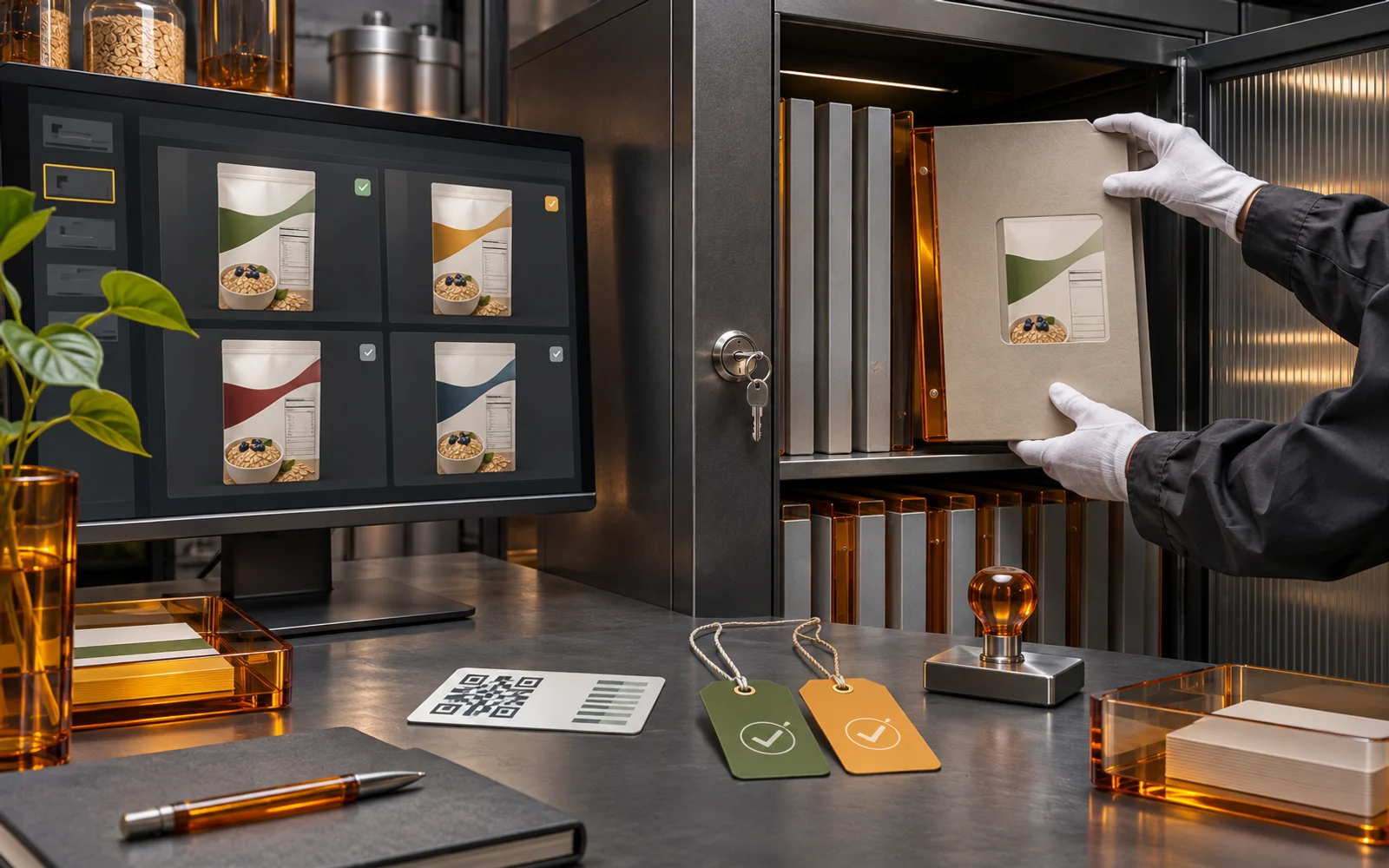
Keep one approved label-artwork master under named ownership, release only identified proofs, restrict ordinary changes and deletion where tested, and preserve an independent recovery copy. A file-control tool supports this workflow but does not prove regulatory compliance.
Keep one approved label-artwork master under named ownership, release only identified proofs, restrict ordinary changes and deletion where tested, and preserve an independent recovery copy. A file-control tool supports this workflow but does not prove regulatory compliance.
the complete artwork package from selected exports through recipient feedback
FICTIONAL LABEL MATERIALS / NO REVIEWER DATA
01 / PURPOSE
Design the review around one decision
This page focuses on the complete artwork package from selected exports through recipient feedback. The main failure is editable source editable artwork masters being confused with controlled review material. Start with the question the reviewer must answer: select a direction, comment on a review experience, validate a rendering sample or approve a defined application. Do not replace a clear review brief with an oversized media bundle.
02 / SOURCE
Keep editable editable artwork masters outside
Retain editable artwork masters, licensed source artwork files, production assets, research and unused directions in the producer’s controlled source environment. Export only what the recipient needs for the stated review. A review package is not the production archive or source-artwork release.
03 / IDENTITY
Make every preview traceable
Use a project-safe name, artwork revision, option label, export date and manifest. Put the identifier in the package and feedback form, not merely in an email subject. Preserve the corresponding source commit or approved working record.
CONTROL SEQUENCE
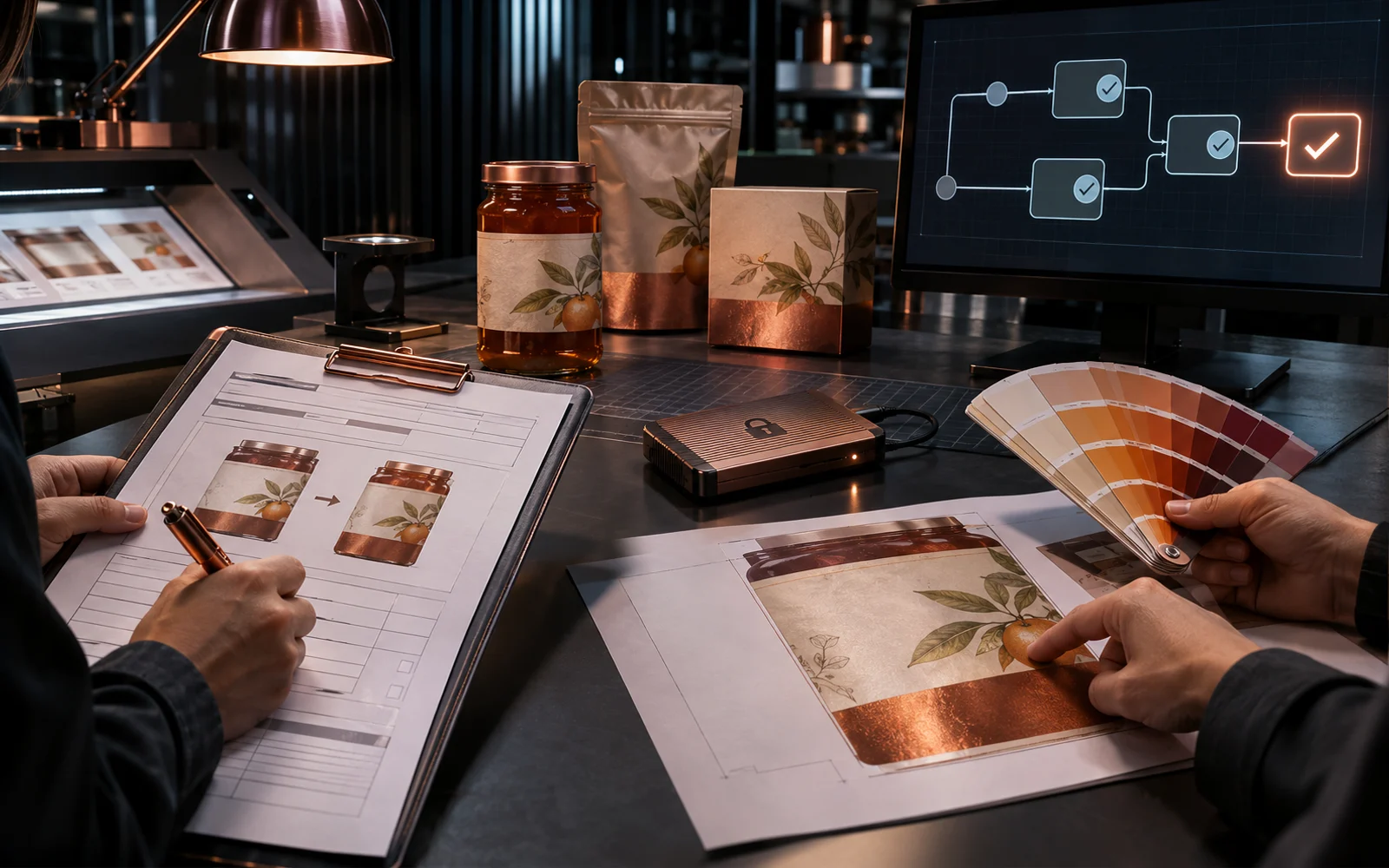
Move the preview through six visible gates
01
Name the engagement, reviewer, preview purpose and exact decision requested.
02
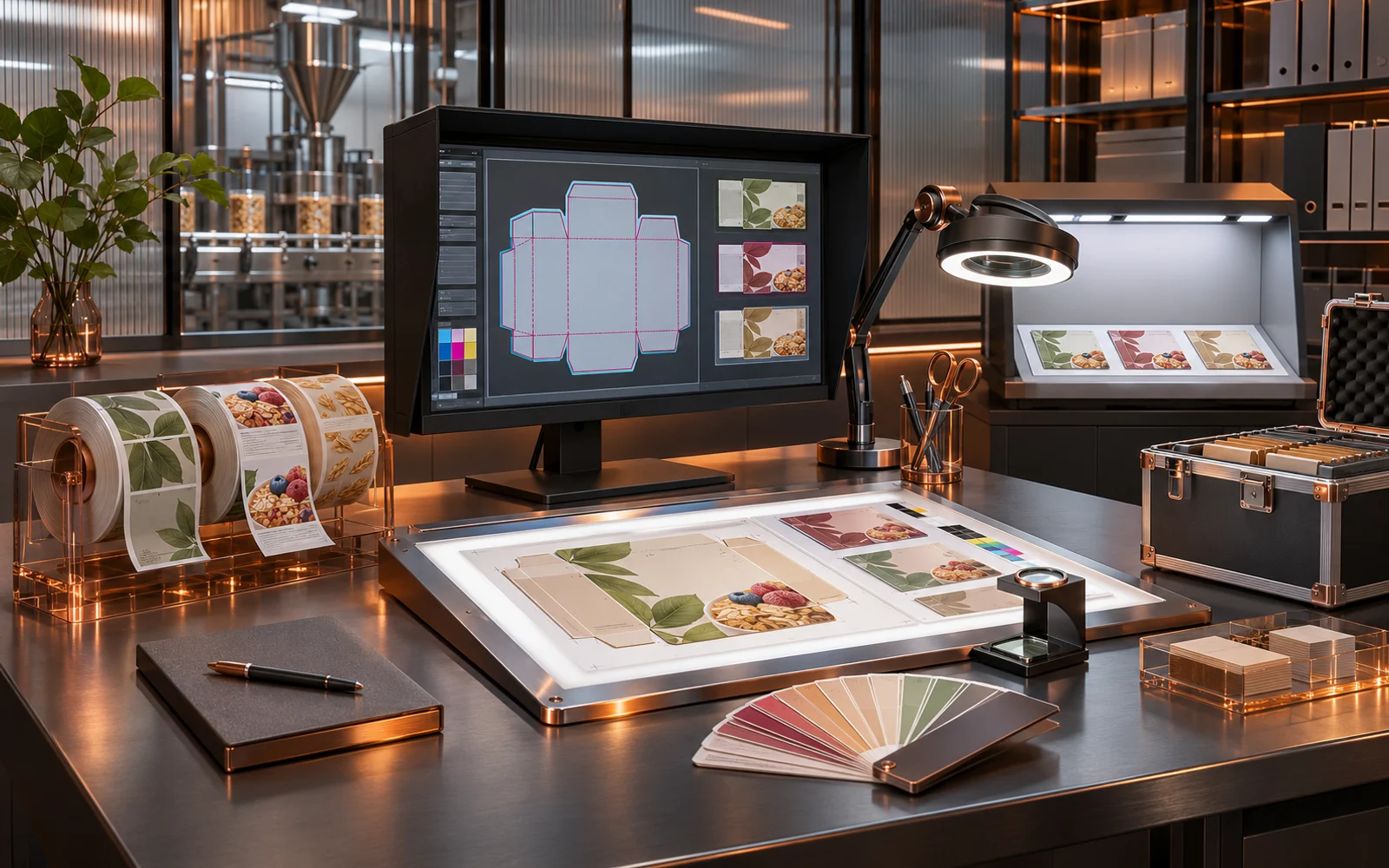
Separate editable source editable artwork masters from exported review previews and supporting application examples.
03
Assign a stable artwork revision, option label and manifest entry to every included file.
04
Test the package on a clean recipient-like device before applying distribution controls.
05
Verify the recipient and send any credential through a separate authenticated channel.
06
Record feedback against the exact artwork revision, then preserve the reviewed package and recovery source.
PACKAGE ANATOMY
Separate content, instructions and evidence
Preview content: approved label proofs in the intended formats, sequence and context.
Viewing instruction: supported device, navigation, rendering, accessibility and fallback route.
Decision prompt: the questions the reviewer should answer and what remains outside scope.
Manifest: filenames, formats, artwork revision and expected package contents.
Receipt: recipient, handoff time, media identity and opening result.
Recovery source: an independent package copy and the editable master retained by the producer.
VISUAL CHECK
Inspect real review contexts
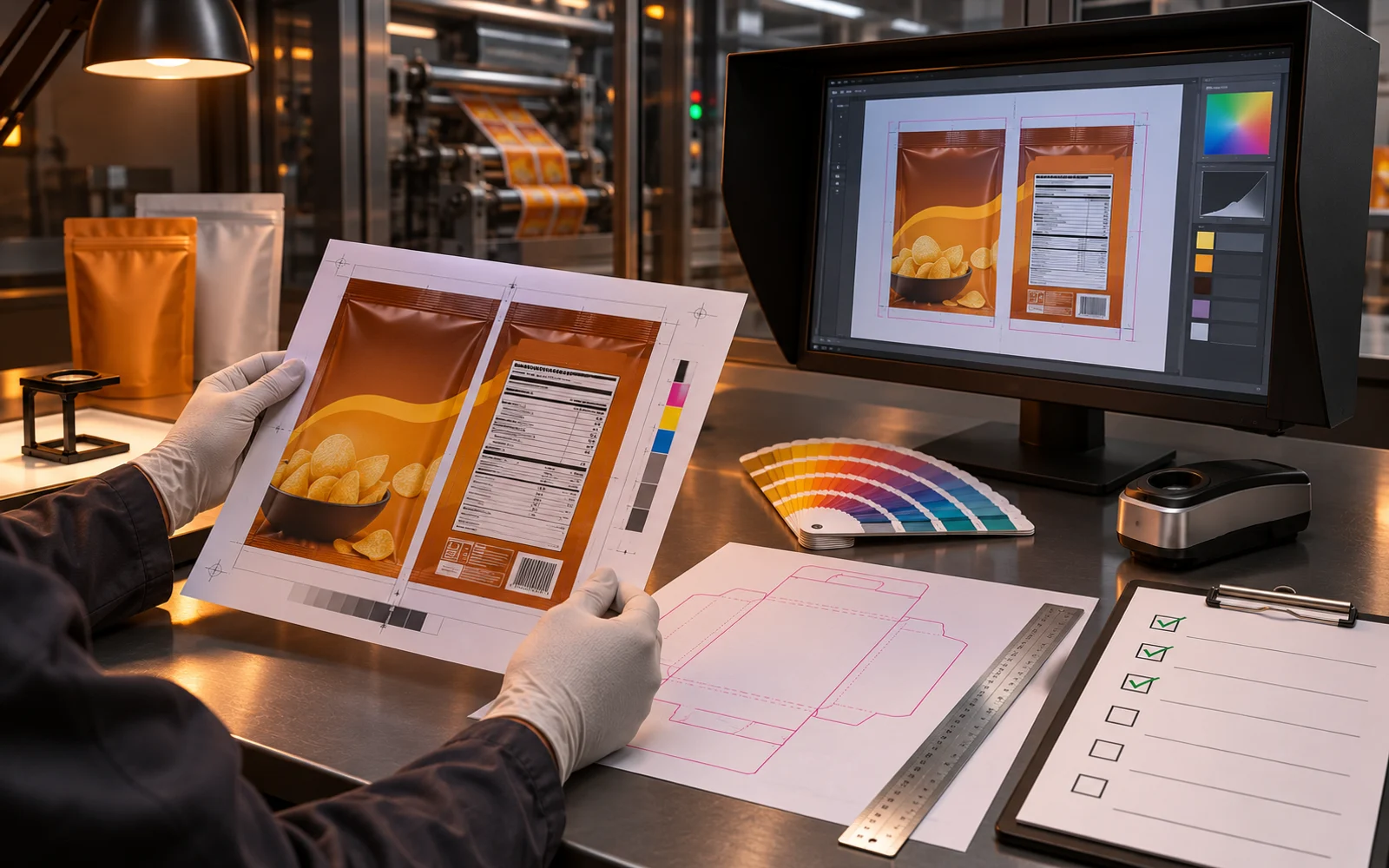
Include only application examples that clarify the decision. Check calibrated displays and print proofs, minimum size, mono and stereo rendering, label panel boundaries and the specific formats the reviewer is evaluating.
TECHNICAL CHECK
Test the recipient path
Open the package from a clean supported environment. Test navigation, rendering, preflight rendering, offline behavior and the approved removal or recovery path before delivery.
LEGAL BOUNDARY
Keep clearance separate
Protected preview media does not conduct licensing searches, establish originality, transfer IP rights, license codecs or approve final editable artwork masters. Record those decisions elsewhere.
ACCESSIBILITY
Provide a usable review
Ensure text instructions are readable, important distinctions are not conveyed by color alone and an authorized accessible alternative exists when the protected viewer is unsuitable.
HANDOFF RECORD
Make the review reproducible
Who
Verified recipient and production owner.
What
Proof edition, option set, manifest and media identifier.
How
Release channel, separate credential route and supported viewer.
Result
Opening test, feedback deadline, exception and recovery contact.
Minimize personal and reviewer information in logs. Keep enough evidence to connect comments to the reviewed edition without turning the handoff record into a copy of the production archive.
LIMITATION MAP
Do not overstate a preview control
Copy controls may discourage or constrain ordinary duplication in a supported viewing path. They cannot prevent photography of a screen, guarantee every device behaves identically, revoke knowledge already seen, establish confidentiality by themselves or replace contracts and recipient trust.
State the tested operating environment, media type, product version and recipient workflow. Provide a recovery and accessibility route. If the control prevents a legitimate review, pause delivery and correct the process rather than asking the reviewer to improvise.
DIRECT ANSWERS
Food label artwork kit questions
Should editable artwork source files be included?
Not for an ordinary review package. Retain source editable artwork masters separately unless source-artwork release is explicitly approved and documented.
Does offline delivery prevent copying?
No. It changes the transfer and viewing context; the exact product and environment must be tested, and physical capture or other paths may remain.
How should feedback identify a preview?
Reference the artwork revision, option, application context and specific requested change rather than relying on “the latest one” or an email screenshot.
OPERATIONAL DEPTH
Connect the preview to a controlled food label artwork workflow
Define the viewing promise
State which label panels, media types, exercises and supporting files the reviewer should be able to open. Record the intended device class, operating environment and offline conditions. This makes a failed launch distinguishable from a missing file, unsupported codec or unclear instruction.
Keep obsolete and linked content separate
Build the preview from an approved export workspace rather than the live artwork-authoring directory. Exclude rights-holder records, authorized reviewer submissions, analytics, credentials, source artwork files and label panels outside the review scope. A small package is easier to test, explain, recover and retire.
Record an observable result
For each test, write the expected behavior, actual behavior, device, version and decision. Screenshots can support the record but should not replace a short written conclusion. An exception needs an owner, a safe workaround and a retest condition.
Plan the return path
Decide whether the offline media is returned, securely retired or retained for a defined period. Keep the authoritative design source and a clean preview export elsewhere. If the only usable copy is the distributed device, recovery has already failed.
Technical restrictions address only part of the problem. Copyright, licenses, confidentiality terms, reviewer trust, accessibility, device support and distribution-platform access remain separate decisions. Describe the tested boundary plainly so the recipient knows what the kit can and cannot establish.
Continue with a documented, safer workflow
Use the original guidance and product evidence on this site. Verify your own environment and keep sensitive records outside demonstrations and tests.